BJP forms government in Bengal after ending TMC’s 15-year rule
Suvendu Adhikari takes oath as West Bengal’s first BJP chief minister
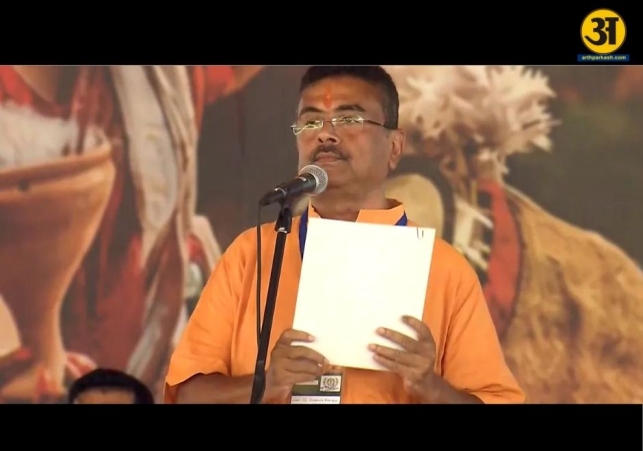
Kolkata: West Bengal entered a new political chapter on Saturday as BJP leader Suvendu Adhikari took oath as the state’s first Bharatiya Janata Party chief minister. The swearing-in ceremony was held at Kolkata’s Brigade Parade Ground in the presence of Prime Minister Narendra Modi, Union ministers, BJP leaders and chief ministers from several NDA-ruled states.
Governor RN Ravi administered the oath of office and secrecy to Adhikari during the grand ceremony attended by thousands of supporters and party workers. The BJP formed the government in West Bengal after winning 207 seats in the 294-member Assembly in the 2026 state elections, ending the Trinamool Congress’ 15-year rule under Mamata Banerjee.
The ceremony was seen as a major political moment not only for West Bengal but also for the BJP, which had struggled for decades to gain power in the state. Supporters gathered early in the morning at Brigade Parade Ground, waving party flags and cheering for the new government. Tight security arrangements were made across Kolkata for the event.
Prime Minister Narendra Modi arrived in Kolkata earlier in the day and greeted supporters gathered at the venue. Several senior BJP leaders, including Amit Shah, Rajnath Singh, JP Nadda, Nitin Gadkari and Dharmendra Pradhan, attended the ceremony. Chief ministers from BJP-ruled states such as Assam, Uttarakhand and Tripura were also present.
The BJP leadership described the victory as historic and said the new government would focus on development, infrastructure, employment and governance in the state. Many BJP leaders called the formation of the government the beginning of a “new era” for Bengal.
Grand ceremony held in Kolkata
The oath-taking ceremony was organised on the occasion of Rabindra Jayanti, the birth anniversary of Nobel laureate Rabindranath Tagore. BJP leaders said the choice of the date was symbolic and aimed at connecting Bengal’s cultural identity with the new government.
Before the ceremony began, Prime Minister Modi paid tribute to Rabindranath Tagore at the venue. He also met and took blessings from 98-year-old BJP veteran Makhanlal Sarkar, one of the party’s oldest workers in West Bengal. Sarkar has been associated with the nationalist movement since the early years after Independence and played an important role in building the BJP organisation in the state.
The Brigade Parade Ground was decorated with large stages, banners and cultural displays. Folk artists and Purulia Chhau dancers performed before the oath ceremony began. Around 20 stalls selling jhalmuri, a popular Bengali snack, were also set up for supporters attending the event.
Security was extremely tight across the city. Police personnel, central forces and intelligence teams were deployed at important locations including Brigade Parade Ground, Suvendu Adhikari’s residence and the airport area where senior leaders arrived.
Several BJP ministers also took oath along with the chief minister. The first cabinet includes leaders such as Dilip Ghosh, Agnimitra Paul, Ashok Kirtania, Kshudiram Tudu and Nisith Pramanik. Agnimitra Paul became the only woman minister in the BJP’s first Bengal cabinet.
Agnimitra Paul is known for her earlier career in fashion design before entering politics. She designed outfits for several Bollywood personalities and later joined the BJP in 2019. Party leaders said her inclusion in the cabinet reflects the BJP’s effort to promote women leaders in the state.
Suvendu Adhikari’s rise to the chief minister’s post has been one of the biggest political developments in West Bengal in recent years. Once a senior Trinamool Congress leader and close aide of Mamata Banerjee, he joined the BJP ahead of the 2021 Assembly elections. Since then, he emerged as one of the strongest opposition faces in the state.
During the recent Assembly elections, Adhikari won from both Bhabanipur and Nandigram constituencies. In Bhabanipur, he defeated Mamata Banerjee by more than 15,000 votes, which BJP leaders described as a major political victory.
ALSO READ: US court strikes down Trump’s global tariffs, calls them illegal
ALSO READ: US ends ‘Operation Epic Fury’ against Iran but tensions remain high
BJP promises development and change
After taking oath, BJP leaders said the new government would work to bring development and investment to West Bengal. Union minister Nitin Gadkari said the people of Bengal had accepted the BJP’s ideology and voted for change. He expressed confidence that the new government would improve infrastructure and economic growth in the state.
Many BJP leaders claimed that the election result reflected public anger against the previous government. They said the people wanted better governance, law and order, job opportunities and industrial growth.
At the same time, Trinamool Congress leaders continued to criticise the BJP government. Former chief minister Mamata Banerjee paid tribute to Rabindranath Tagore on Rabindra Jayanti and spoke about unity and harmony. She said Bengal’s culture has always believed in togetherness and social peace.
Political observers believe the BJP government in Bengal will now face the challenge of fulfilling the promises made during the election campaign. Issues such as unemployment, industrial investment, rural development and infrastructure are expected to remain key priorities.
The new government is also likely to focus on improving roads, transport systems and welfare programmes. BJP leaders said they want to transform West Bengal into a major economic and industrial hub.
For the BJP, the victory in Bengal is considered one of its biggest achievements in eastern India. The party had worked for years to expand its organisation in the state, where regional and Left parties had dominated politics for decades.
The swearing-in ceremony ended with loud cheers from BJP supporters as Suvendu Adhikari greeted the crowd along with senior party leaders. With the formation of the new government, West Bengal has entered a new political phase that is expected to shape the state’s future politics in the coming years.
Related News